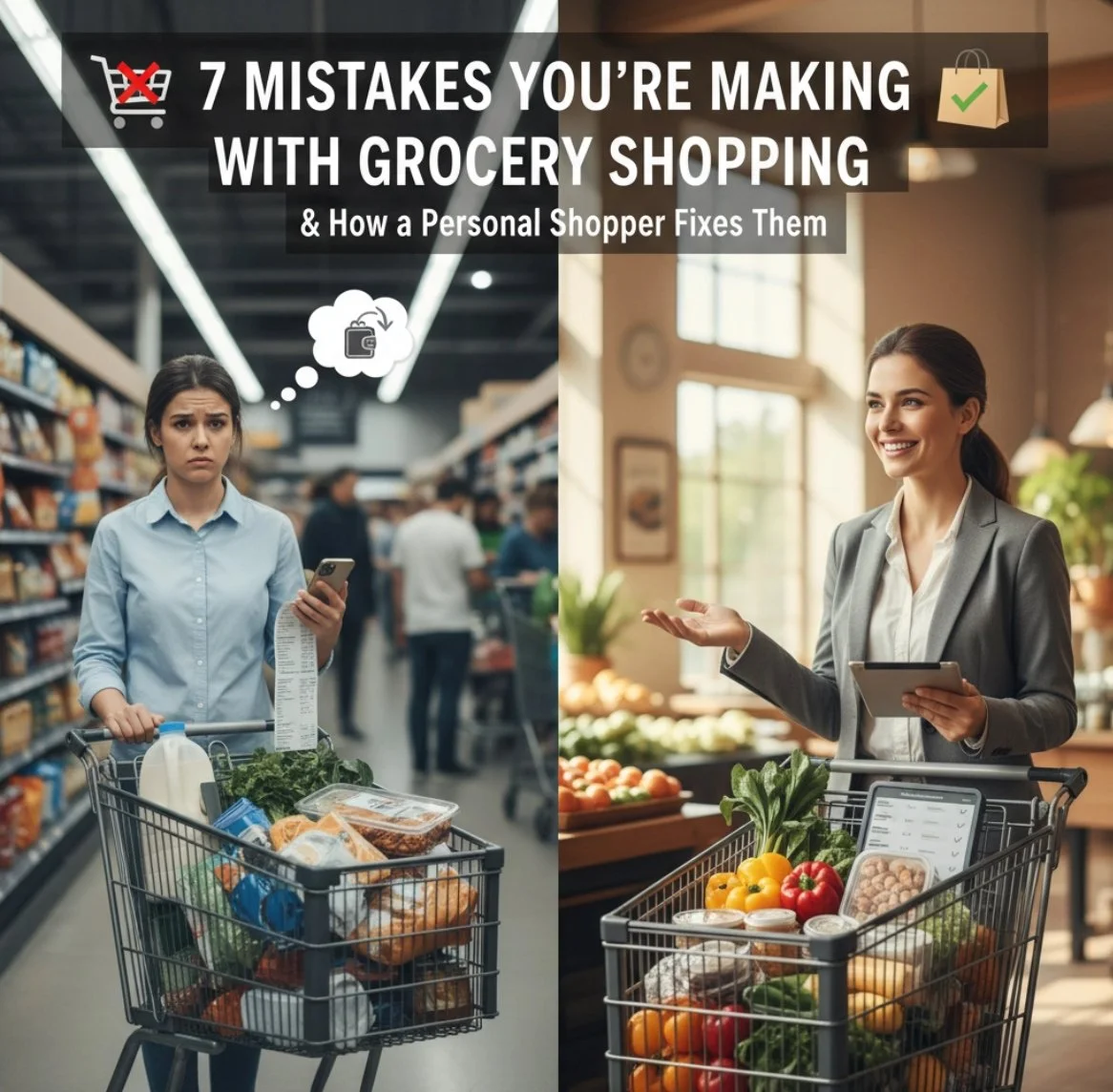
7 Mistakes You're Making with Grocery Shopping (and How a Personal Shopper Fixes Them)
Let's be real, grocery shopping shouldn't be rocket science, but somehow it feels harder than ever. Between juggling work, family, and everything else on your plate, those quick trips to the store turn into budget-busting stress fests that leave you wondering where the heck your money went.
If your grocery bills keep climbing and your fridge still looks empty, you're probably making some common mistakes that are costing you big time. The good news? These aren't character flaws, they're just habits that can be fixed. Even better news? This is exactly what personal shoppers deal with every day, and we've got the solutions.
Mistake #1: Shopping Without a Game Plan
You know that feeling when you walk into the grocery store and just... wander around hoping inspiration strikes? Yeah, that's a recipe for disaster. Without a list, you're basically playing grocery roulette: and the house always wins.
When you shop without a plan, you end up grabbing random stuff that looks good in the moment, forgetting half the things you actually need, and somehow spending way more than you intended. It's like going on a road trip without a GPS and wondering why you're lost.
How a personal shopper fixes this: Before we even set foot in a store, we create a detailed shopping list based on your meal plan for the week. We know exactly what you're making Monday through Sunday, what ingredients you need, and how much of everything to buy. No wandering, no guessing, no "oh that looks good" impulse grabs.
Mistake #2: Not Checking What You Already Have
How many times have you bought something only to get home and find the exact same item hiding in your pantry? We've all been there: standing in your kitchen holding two bottles of soy sauce wondering how this happened again.
This mistake is sneaky because it doesn't feel like a big deal in the moment, but it adds up fast. You're basically buying the same groceries twice, and that's money straight down the drain.
How a personal shopper fixes this: We always start with a pantry and fridge check. Before making any list, we take inventory of what you already have at home. Got three cans of black beans? Great, we're not buying more. Half a bag of rice left? We'll skip it this trip. This simple step alone can cut your grocery bill by 15-20%.
Mistake #3: Falling for the Pre-Cut Trap
Those pre-cut vegetables and pre-made meals look so convenient, don't they? And sure, they save time, but they're absolutely destroying your budget. You're paying someone else to do five minutes of work that you could easily do yourself.
Pre-cut carrots can cost three times more than whole carrots. Pre-made salads are marked up by 400% compared to buying the ingredients separately. The convenience factor is real, but so is the price tag.
How a personal shopper fixes this: We buy whole foods and do the prep work for you. Instead of pre-cut fruit, we buy whole fruits and slice them during our service. Instead of pre-made meals, we grab the individual ingredients. You get the same convenience without the crazy markup.
Mistake #4: Ignoring Unit Prices and Store Brands
Here's a secret that grocery stores don't want you to know: those little price tags showing cost per unit are your best friend. Most people just look at the big price on the front and make decisions based on that, but the real story is in the fine print.
A 16 oz jar for $4 might seem cheaper than a 24 oz jar for $5, but when you break it down per ounce, the bigger jar is actually the better deal. And don't even get me started on store brands: they're usually 20-40% cheaper than name brands for the exact same quality.
How a personal shopper fixes this: We're unit price ninjas. We automatically compare cost per ounce, per pound, per whatever, and choose the best value every time. We also default to store brands unless there's a specific reason to go with name brand. Your taste buds won't know the difference, but your wallet definitely will.
Mistake #5: Shopping During Rush Hour
Shopping when everyone else is shopping is like choosing to drive during rush hour: it's going to be slower, more stressful, and you'll make worse decisions. Crowded stores make you feel rushed, which leads to grabbing whatever's closest instead of what's cheapest or best.
Plus, the stress of dealing with long lines and packed aisles makes the whole experience miserable. When you're stressed and rushed, you're way more likely to make expensive mistakes.
How a personal shopper fixes this: We shop during off-peak hours when stores are calmer and less crowded. This means better selection, shorter lines, and the mental space to make smart decisions. We also know which stores are less busy on which days, so we can plan accordingly.
Mistake #6: The "Just One Thing" Lie
This might be the most expensive lie we tell ourselves: "I just need to run in for one thing." Those "quick trips" almost always turn into $50+ shopping sprees because grocery stores are designed to make you buy more than you planned.
You walk in for milk and somehow leave with chips, ice cream, and a bottle of wine. The store layout, product placement, and end-cap displays are all strategically designed to catch your eye and open your wallet.
How a personal shopper fixes this: We stick to one planned shopping trip per week, period. No emergency runs, no "quick stops," no exceptions. Everything gets planned in advance, and if something gets forgotten, it either waits until next week or gets added to a running list for the next planned trip. This discipline alone can save hundreds of dollars per month.
Mistake #7: Ignoring What's Actually in Your Food
Most people shop on autopilot, grabbing familiar brands without ever reading the labels. But if you're trying to eat healthier, manage a medical condition, or just avoid certain ingredients, this habit can sabotage all your good intentions.
That "healthy" granola might be loaded with sugar. Those crackers might have more sodium than a bag of chips. Without reading labels, you're flying blind.
How a personal shopper fixes this: We read every label and ingredient list. We know what to look for and what to avoid based on your health goals and dietary needs. If you're trying to reduce sodium, we find the lowest-sodium options. If you're avoiding artificial ingredients, we check every label to make sure we're choosing clean products.
The Bottom Line
These mistakes aren't just costing you money: they're costing you time, energy, and peace of mind. Every trip to the store becomes a stressful guessing game instead of a simple task to check off your list.
The solution isn't to become a grocery shopping expert overnight. It's to work with someone who already is. A personal shopper takes all these pain points off your plate, literally and figuratively. We handle the planning, the shopping, and the smart decision-making so you can focus on the things that actually matter to you.
Your time is valuable. Your money is valuable. And your peace of mind? That's priceless. Instead of dreading your next grocery run, imagine having it handled by someone who knows exactly how to do it right, every single time.
Ready to stop making these expensive mistakes? Let's talk about how a personal shopper can transform your grocery game for good.
Blog Post Title One
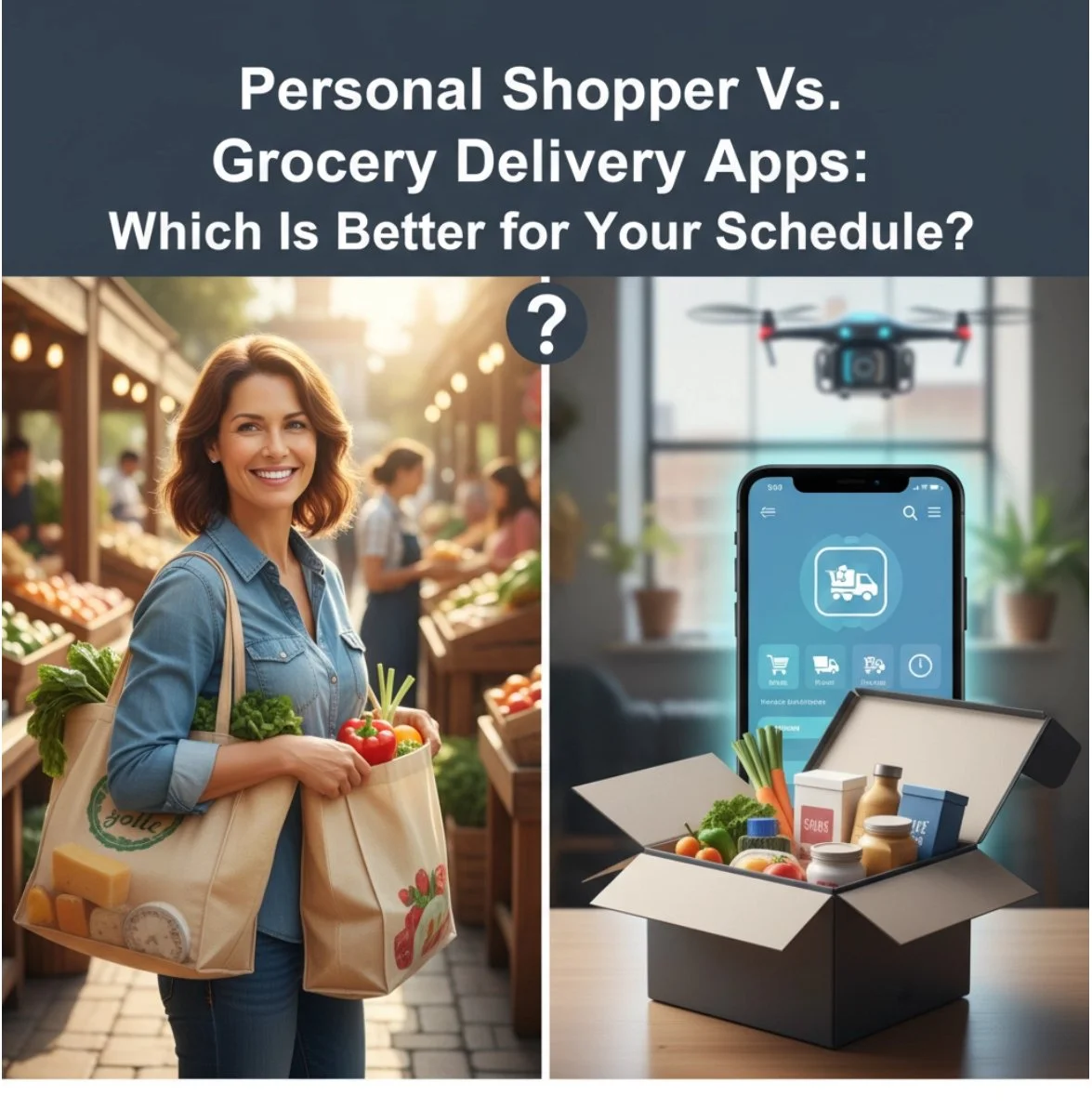
Personal Shopper Vs. Grocery Delivery Apps: Which Is Better for Your Schedule?
When you're juggling work, family, and everything else life throws at you, grocery shopping can feel like just another item on your never-ending to-do list. The good news? You have options. Personal shoppers and grocery delivery apps both promise to save you time, but they work in completely different ways.
The real question isn't just which one gets groceries to your door faster: it's which one actually fits your schedule and lifestyle better. Let's break down how these two services stack up when it comes to managing your time.
Personal Shoppers: The Relationship Approach
Think of a personal shopper as having a grocery shopping buddy who really gets you. These are typically local individuals or small services where you work with the same person every time. Over time, they learn exactly what you like: your preferred brand of pasta sauce, how ripe you like your bananas, and which substitutions you're okay with.
How Personal Shoppers Handle Your Schedule
Personal shoppers usually work on appointment-based scheduling. You might text or call them a day or two ahead to set up your next grocery run. This means you need to plan ahead, but it also means you get their full attention during your shopping trip.
The scheduling flexibility varies by shopper. Some work traditional business hours, while others might accommodate evening or weekend requests. Since you're dealing directly with one person, your schedule needs to align with theirs.
The Time Investment Upfront
Here's what most people don't expect: working with a personal shopper requires some initial time investment. You'll spend time explaining your preferences, dietary restrictions, and shopping habits during your first few orders. But this upfront effort pays off: each shopping trip gets more accurate and efficient.
Quality Control Takes Time (But Saves You Time Later)
Personal shoppers actually inspect your groceries. They check expiration dates, squeeze avocados, and make sure your produce meets your standards. This careful selection process might make each shopping trip slightly longer, but it prevents those frustrating moments when you discover wilted lettuce or expired yogurt in your delivery.
Grocery Delivery Apps: The On-Demand Solution
Apps like Instacart, Shipt, and others work more like rideshare services for groceries. You place an order through their app, and whoever's available picks it up. These platforms have revolutionized grocery delivery by making it incredibly fast and widely available.
Lightning-Fast Delivery
The biggest scheduling advantage of delivery apps is speed. Many can deliver groceries in as little as one hour. Need dinner ingredients at 6 PM? No problem. This immediacy makes them perfect for last-minute needs and spontaneous meal planning.
24/7 Availability
Unlike personal shoppers who have limited hours, most delivery apps operate around the clock. You can place an order at midnight if you want: someone will usually pick it up the next morning. This flexibility is huge if you work odd hours or suddenly realize you're out of baby formula at 11 PM.
The Gig Economy Reality
Here's the trade-off: you'll get a different shopper almost every time. Each person has different standards for produce quality, different communication styles, and different levels of attention to detail. Some shoppers are fantastic, others... not so much.
Planning vs. Spontaneity
Delivery apps require you to build detailed shopping lists in advance. You can't just tell someone "grab whatever looks good for dinner tonight" like you might with a personal shopper. The apps need specific items, quantities, and backup options for substitutions.
The Real Cost of Your Time
When comparing these services, the sticker price is just part of the story. Let's look at the hidden time costs:
Personal Shoppers:
Initial setup time: 2-3 shopping trips to establish preferences
Planning time: 10-15 minutes per order (phone calls or detailed texts)
Schedule coordination: Working around their availability
Quality time saved: Rarely need to return bad produce or items
Delivery Apps:
App learning curve: 30-60 minutes initially figuring out the interface
List building: 15-30 minutes per detailed order
Dealing with substitutions: 5-10 minutes reviewing and approving changes
Quality issues: Occasional time lost dealing with poor selections
Cost Considerations That Affect Your Schedule
Personal shoppers often charge transparent fees and use in-store prices with actual sales and coupons applied. This can save you money, but it also means scheduling around store sales if you want maximum savings.
Delivery apps typically add markups to item prices plus service fees, tips, and sometimes membership costs. A $99 annual membership might save you time by reducing per-order planning if you shop frequently, but it's another factor to consider in your scheduling decisions.
Which Service Fits Different Lifestyles?
Choose a Personal Shopper If:
You have a predictable schedule and can plan grocery needs 24-48 hours ahead. This works great for people with routine meal planning who shop weekly or bi-weekly. If you're particular about produce quality or have complex dietary needs that require explanation, the relationship aspect pays off big time.
Personal shoppers also make sense if you're trying to save money while saving time: their access to actual store prices and coupons can offset their service fees.
Choose Delivery Apps If:
Your schedule is unpredictable or you frequently need groceries on short notice. If you travel for work, work irregular hours, or have young kids that make planning difficult, the on-demand nature of apps provides crucial flexibility.
They're also better if you live in a busy urban area where personal shoppers might not be available, or if you have mobility issues that make traditional grocery shopping challenging.
Making the Scheduling Decision
The best choice often comes down to how you prefer to manage your time. Do you like planning ahead and building relationships (personal shopper), or do you prefer flexibility and immediate solutions (delivery apps)?
Some people actually use both services for different situations. A personal shopper for weekly meal planning and big shopping trips, and delivery apps for forgotten items or last-minute needs.
The Bottom Line on Your Schedule
Personal shoppers work best when you can plan ahead and want consistent, high-quality service. They're like having a reliable grocery shopping assistant who gets better over time.
Delivery apps excel when you need maximum flexibility and speed, even if it means dealing with variable quality and higher costs.
Your schedule, budget, and shopping style will determine which service actually saves you more time in the long run. Consider trying both options with small orders to see which approach feels more natural for your lifestyle.
The goal isn't just getting groceries delivered: it's finding a system that reduces your overall stress and frees up time for the things that matter most to you.